




Youth Ambassadors Program
The research behind the relationship.
We are studying what works for families, with research partners in three countries.
Why are we doing this?
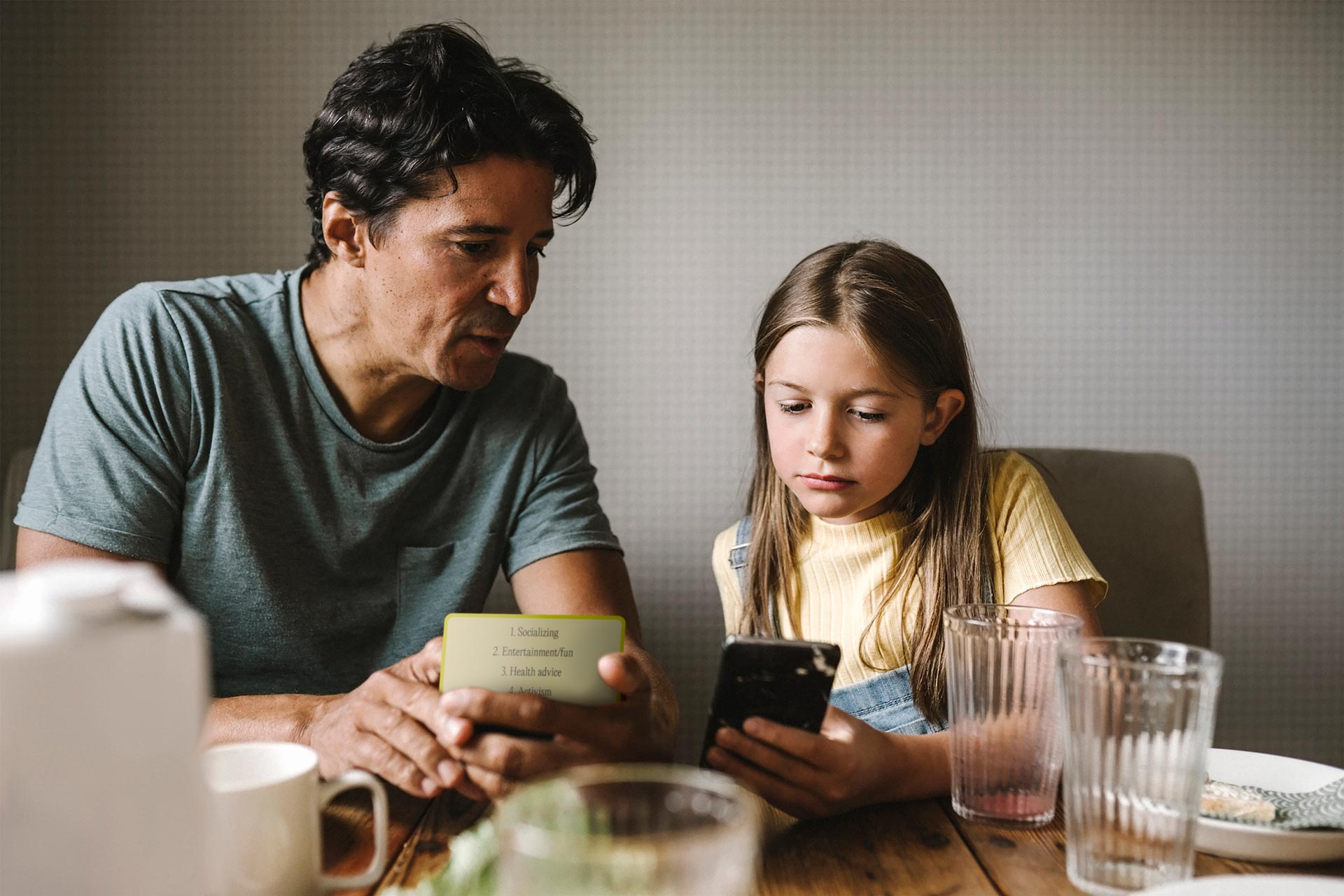
Most of what parents read about screens, social media, and children is either fear or opinion. There is very little practical guidance, and almost none of it has been studied carefully with real families over time.
We believe that a relationship built on trust, not fear, is the single most protective thing a child can have online. The research from across psychology and child development consistently points in that direction. But belief is not enough.
What are we measuring?
The thing we care about most is whether a child feels like they can tell their parents when something online feels wrong. Whether they bring home the hard questions instead of hiding them. Whether, when the agreement gets broken (and it will get broken), the family can meet that moment and talk about it.
Those are the things that actually protect a child when no one's watching. You can't measure them quantitatively, but you can still study them. And that's what we're doing.
Who is behind it?
The studies are led by Stine Liv Johansen, PhD, of Aarhus University, working alongside Michele Capurso, Professor of Educational and Pediatric Psychology at the University of Perugia, with teachers and advisors across three countries. Jessica sits on the research team and helps shape the questions and methodology.
Everyone involved shares one starting point: the relationship is the protection. We're just trying to prove it, with people who know how you can do that.
Let’s Partner to Raise Digital Citizens.


