








When a child is hurt, scared, or embarrassed online, blocking the other person can feel like the fastest way to make it stop. And sometimes blocking is exactly what needs to happen. But before a child blocks someone, deletes a message, leaves a group chat, or closes an account, it can be helpful to save evidence first.
Not because parents want to keep painful messages around forever, but because screenshots, links, usernames, dates, and context may be needed later if the situation has to be reported to a school, platform, another parent, or authorities.
This can feel uncomfortable. A child may want the messages gone immediately. A parent may want to remove the person right away. Both reactions make sense.
The goal is not to make the child relive the harm. The goal is to help them feel protected while preserving enough information to take the next safe step.
Why Evidence Matters Before Blocking
When children are upset, they often want the problem to disappear quickly. Blocking can bring immediate relief because the person can no longer message, tag, comment, or contact them in the same way.
But once someone is blocked, some platforms make it harder to see the person’s profile, retrieve messages, access shared content, or prove what happened.
This matters because online harm is not always obvious to adults. What looks like one mean message may be part of a longer pattern. What seems like a joke may be linked to exclusion, impersonation, threats, or pressure. If your child is being targeted online, having evidence can help adults understand the situation more clearly.
Saving evidence does not mean your child has to stay connected to the person. It simply means pausing long enough to keep a record before blocking, reporting, or deleting.
Start With Calm Support
Before asking your child to show you messages, screenshots, or account details, try to steady your own reaction first. Children often notice a parent’s tone before they hear the words.
If they think they will be blamed, punished, or lose their device, they may share less than you need to know. A calm response helps them understand that telling you was the right choice.
You might say, “You are not in trouble for showing me. We are going to handle this together.”
Or, “I know this feels upsetting. First, we will save what happened, then we will decide what to do next.”
This kind of response does not make the situation smaller. It simply helps your child feel safe enough to stay open, especially if the messages are embarrassing, threatening, or connected to online bullying behavior.
What to Save Before Blocking

Evidence is most useful when it shows what happened, who was involved, where it happened, and when it happened.
Children may not know what adults need to see. They might screenshot only one message, even when the surrounding conversation explains the situation better. They might crop out the username without realizing that the username matters.
A simple checklist can make the process less overwhelming.
|
What to Save |
Why It Matters |
How to Save It |
|
Messages or comments |
Shows the words used and the tone of the interaction |
Take screenshots of the full conversation, not only one line |
|
Username and profile |
Helps identify the account involved |
Screenshot the profile page, handle, display name, and profile photo |
|
Dates and times |
Shows when it happened and whether it is repeated |
Include timestamps in screenshots when possible |
|
Group chat names |
Shows where the behavior happened |
Screenshot the group name and visible participants |
|
Posts, captions, or stories |
Shows public or semi-public harm |
Screenshot the content before it disappears |
|
Links or URLs |
Helps platforms, schools, or authorities find the content |
Copy and save links when available |
|
Threats or pressure |
Shows urgency and possible safety concerns |
Save the exact wording without editing it |
|
Reports already made |
Shows what action has been taken |
Screenshot confirmation emails or report receipts |
The evidence does not need to be perfectly organized in the moment. It just needs to be saved before it disappears.
Help Your Child Capture Context
Children often focus on the most painful message. That is understandable. But adults may need context to understand what led up to it and what happened afterward.
For example, a screenshot that says “Everyone hates you” is serious. But it may be even clearer if the surrounding messages show that others were encouraging exclusion, sharing private information, or pressuring your child not to tell anyone.
Some forms of online harm are not one single message. They may happen across comments, group chats, shared images, gaming platforms, or anonymous accounts.
When possible, help your child save:
- The message before the harmful comment
● The harmful comment itself
● Any replies that show others joining in
● The account name or profile
● The date and time
● Any related posts, stories, or group chats
This does not mean reading every private conversation your child has ever had. It means staying focused on the harmful situation and helping them preserve what may be needed.
What Parents Can Say in the Moment

When a child is upset, long explanations can feel like pressure. Short, calm language is often easier to receive.
|
Child Says |
Parent Can Say |
|
“I just want to block them now.” |
“We will block them. First, let’s save what happened so you do not have to explain it from memory.” |
|
“I don’t want you to see it.” |
“I understand. You can show me only what is connected to this situation, and we will go slowly.” |
|
“It’s embarrassing.” |
“I know it feels that way, but the person who hurt you is responsible for their behavior.” |
|
“What if they find out?” |
“We will think carefully about the safest order: save, report if needed, then block.” |
|
“I should have handled it myself.” |
“You should not have to manage this alone. Getting help is not overreacting.” |
|
“Can I delete it?” |
“We can remove it from your everyday view after we save what we need.” |
The goal is to help your child feel less alone, not to turn the moment into an investigation.
Save Evidence Without Shaming Your Child
Sometimes parents discover details they did not expect. Maybe the child replied angrily. Maybe they shared something they regret. Maybe they were in a group chat they were not supposed to be in.
These details may matter, but they do not need to become the first conversation.
If your child feels blamed, they may stop showing you the parts that are most important for their safety. You can come back to rules, judgment, privacy, and digital choices later.
In the moment, try to separate two things:
- “We need to understand what happened.”
- “We may need to talk later about safer choices.”
Both can be true.
A parent might say, “We can talk about the app later. Right now, I want to help you with what happened.”
That kind of response keeps the door open.
When the Content Disappears Quickly
Some apps and platforms are designed for quick messages, disappearing photos, temporary stories, or live interactions. This can make evidence harder to save.
That does not mean there is nothing parents can do. It means children need to know ahead of time that if something harmful happens, they should pause before closing the app.
This is especially important on apps where messages disappear, usernames are hidden, or people use temporary accounts. In some cases, harm may come through anonymous bullying apps, which can make children feel even more powerless.
A simple family rule can help:
“If something online scares you, pressures you, or makes you feel unsafe, do not reply. Do not delete. Come get me or another trusted adult.”
This rule is not about surveillance. It is about giving your child a plan before emotions take over.
What to Do Before and After Blocking
Blocking can be a helpful boundary. But it works best when it is part of a thoughtful sequence.
|
Step |
What to Do |
Why It Helps |
|
Pause |
Ask your child not to reply or delete anything yet |
Prevents escalation and preserves evidence |
|
Save |
Take screenshots, record usernames, dates, links, and context |
Creates a clear record of what happened |
|
Report |
Use the platform’s reporting tools if needed |
Alerts the app or site to harmful behavior |
|
Block |
Block the person after evidence is saved |
Stops direct contact where possible |
|
Secure |
Change passwords or privacy settings if needed |
Reduces further access or exposure |
|
Share |
Contact school, platform, another parent, or authorities if appropriate |
Brings in adult support |
|
Check in |
Keep talking over the next days or weeks |
Helps your child process what happened |
This order may need to change if there is immediate danger. If a child is being threatened, blackmailed, stalked, or told not to tell anyone, safety comes first.
When Threats, Hacking, or Blackmail Are Involved
Some online situations need more urgent adult action. If someone threatens your child, claims they have hacked an account, demands money, or pressures your child to keep quiet, treat it seriously.
Your child should not have to decide what to do alone. When a situation involves online threats or hacking, parents may need to save evidence, report the account, secure passwords, contact the school, or get help from local authorities.
Save What You Can Without Engaging
If it is safe to do so, help your child save the message, username, profile, date, and time before blocking. Do not ask your child to reply, negotiate, or prove anything to the person.
The goal is to keep a record without giving the other person more attention or control. A screenshot can be enough to show what was said, who said it, and where it happened.
Secure the Account and Get Support
After saving evidence, help your child change passwords, turn on two-factor authentication, and check account recovery settings. This is especially important if someone says they have access to an account or private information.
If the threat involves stalking, extortion, sexual images, or real-world harm, bring in outside help. That may mean contacting the platform, school safeguarding staff, or local authorities so the situation can be handled safely.
When Private Information Has Been Shared
If someone shares your child’s address, phone number, school, location, real name, or other private details, the situation can feel frightening.
A child may feel exposed, unsafe, or responsible. They may worry that everyone has seen it or that the information can never be taken back.
When private details spread, saving evidence can help show what was shared, where it appeared, and who posted it. This can be important for reporting the content and asking for removal.
Try to save:
- The post or message showing the private information
● The account that posted it
● Any comments encouraging others to use it
● The platform or group where it appeared
● The time and date
● Any link to the content
After that, focus on reducing exposure. This may include reporting the post, changing privacy settings, removing location details from profiles, checking public accounts, and helping your child feel safe offline as well as online.
When It Might Be a Misunderstanding
Not every painful online moment is cyberbullying. Sometimes children misread tone, sarcasm, emojis, silence, group chat behavior, or short replies.
That does not mean their feelings are wrong. A misunderstanding can still hurt.
Before assuming intent, help your child look at the situation clearly. If it may be an online misunderstanding, screenshots can still be useful because they allow everyone to slow down and review what was actually said.
You might ask:
- “What did you think they meant?”
● “Has this happened before?”
● “Was anyone else involved?”
● “Do you feel unsafe, or do you feel hurt and confused?”
● “Would this be easier to understand with help from an adult?”
If the situation is a one-time misunderstanding, the next step may be a calm conversation. If it is repeated, targeted, humiliating, threatening, or isolating, it may need stronger intervention.
Evidence Is Not the Whole Solution
Saving evidence is important, but it is not the same as emotional repair.
A child may still feel anxious after the person is blocked. They may worry about school, friendships, group chats, gaming communities, or what others think of them. They may replay the messages in their mind.
This is why evidence-saving should be part of a wider plan to strengthen online safety, not the only step.
Children need to know:
- They are not alone
● They are not to blame for being targeted
● Adults can help
● Blocking is allowed
● Reporting is allowed
● Screenshots are not about drama; they are about protection
● They can come back if the person finds another way to contact them
Support does not end once the screenshots are saved.
Keep Evidence Somewhere Safe
Once evidence is saved, decide where it will go.
Keeping screenshots mixed into your child’s camera roll may make them feel like they are seeing the harm again and again. At the same time, deleting everything too soon may make it harder to get help later.
A parent can create a simple folder, email the evidence to themselves, or save it in a secure location. The child does not need to carry the evidence emotionally or physically.
You might say, “I will keep this safe so you do not have to keep looking at it.”
That small step can help a child feel that an adult has taken some of the weight.
Teach the Skill Before There Is a Crisis
Children often cannot remember safety steps when they are already scared, embarrassed, or overwhelmed. That is why it helps to talk about saving evidence before something serious happens, while everyone is calm and the conversation can stay practical.
This does not need to be a frightening discussion. It can be part of everyday digital citizenship, just like talking about seatbelts, passwords, privacy settings, or checking in before downloading a new app.
A parent might say, “If someone sends you something cruel, threatening, or uncomfortable, the first step is not to reply or delete it. The first step is to save it and come to me.”
Or they might say, “Blocking is a good tool. We just want to save what happened first, in case we need help later.”
These conversations help children understand that some digital boundary violations are serious enough to document, even when they happen through a screen.
A Calmer Way to Handle Blocking

Helping your child save evidence before blocking someone online is not about making the situation bigger than it is. It is about making sure your child does not have to prove what happened from memory later.
Children deserve the relief of blocking harmful contact. They also deserve adults who can help them slow down, save what matters, and take action with care.
Some situations will be simple. A screenshot, report, and block may be enough. Other situations may need help from school staff, platforms, other parents, counselors, or authorities.
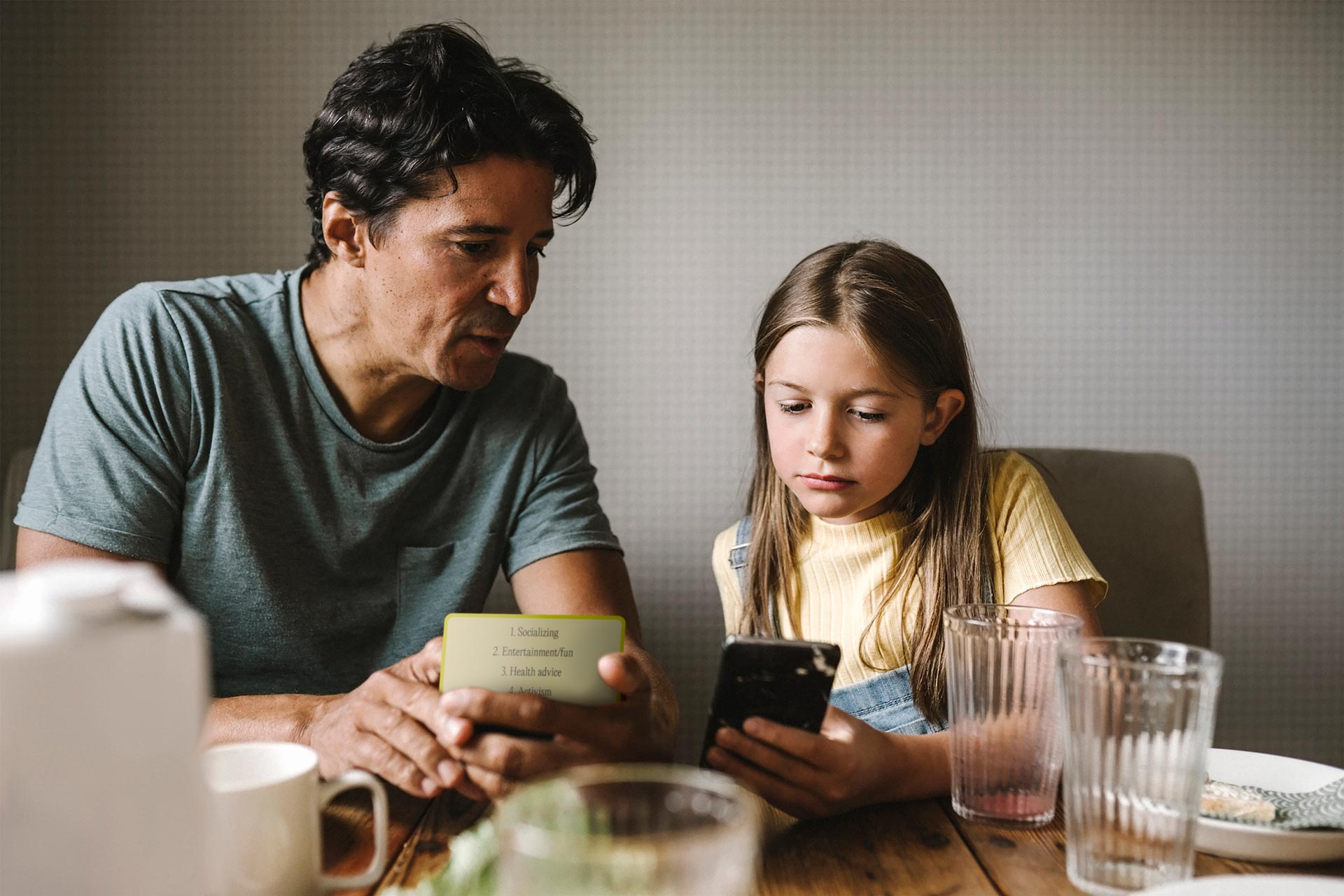
If these conversations feel hard to start, simple tools like conversation cards can help parents talk about online safety before a child is already overwhelmed.
In all cases, the message to your child can stay steady:
“You do not have to keep dealing with this. We will save what happened, then we will help you get safe.”
FAQs
1. Should my child block someone immediately?
If your child is in immediate danger or feels unsafe, blocking may need to happen quickly. When possible, it is helpful to save screenshots, usernames, dates, and messages before blocking because some content may be harder to access afterward.
2. What evidence should we save before blocking?
Save screenshots of messages, comments, profiles, usernames, group chats, dates, times, links, and any threats. Try to include context before and after the harmful message so adults can understand the full situation.
3. What if my child already blocked the person?
Do not panic. Check whether messages, reports, emails, notifications, or screenshots are still available. Some platforms allow users to view blocked accounts or message history. If not, write down what your child remembers, including dates, usernames, platforms, and who else may have seen it.
4. Should my child reply before blocking?
Usually, it is better not to reply. Responding can sometimes escalate the situation or give the other person more attention. A safer first step is to save the evidence, tell a trusted adult, report if needed, and then block.
5. What if the evidence includes private or sexual images?
Do not forward, share, or repost private or sexual images. If the image involves a child, get help from the platform, school safeguarding contact, or local authorities so the situation can be handled safely and legally.
6. How can I help my child feel better after saving evidence?
Reassure them that saving evidence does not mean they have to keep looking at it. Move the screenshots to a safe place, block or report the person when appropriate, and keep checking in. A child may need emotional support even after the online contact stops.