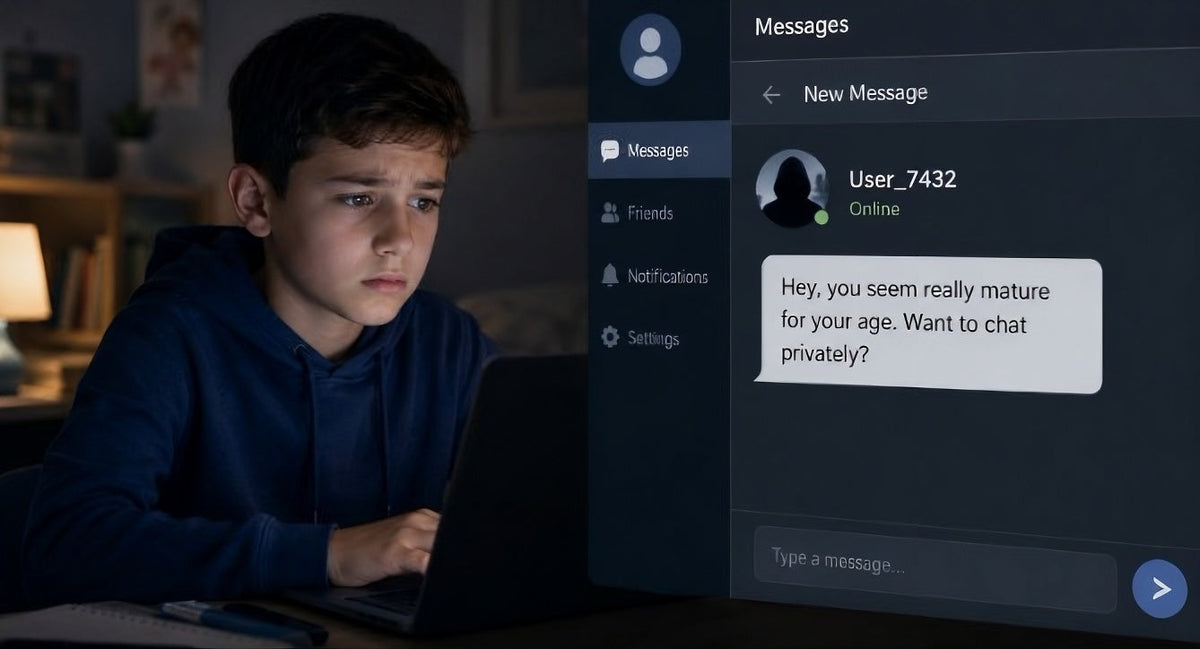








A child stares at a screen, heart racing, unsure what to do next. Something feels wrong, but instead of calling out, they go quiet. Many parents recognize this moment not because they witnessed it, but because they sensed it afterward.
Online spaces move fast, and fear often moves faster. When kids feel overwhelmed, confused, or ashamed, freezing can feel safer than speaking up. For parents who value trust, collaboration, and emotional closeness, this silence can be one of the hardest challenges to navigate.
Why kids freeze online instead of asking for help
Freezing is not a failure. It is a natural stress response. Just like fight or flight, freeze happens when the brain feels trapped and unsure which action is safe.
The child’s nervous system at work
When something upsetting happens online, a child’s brain may:
-
Struggle to process what is happening
-
Feel flooded with fear or shame
-
Shut down communication to self-protect
This response is more common than many parents realize, especially in digital spaces where adults are not physically present even when safety tools or filters are already in place.
Fear of getting in trouble
Many children worry that speaking up will lead to:
-
Losing device privileges
-
Being blamed for “clicking something wrong”
-
Disappointing their parents
Even in respectful households, kids may assume consequences, not because parents are harsh, but because kids often internalize responsibility quickly especially when they don’t yet understand online scam patterns that are designed to trick anyone.
Shame and self-blame
Online harm often carries shame, especially when it involves:
-
Scams
-
Manipulation
-
Sexualized messages or images
-
AI-generated content that feels confusing or invasive
Kids may think:
-
“I should have known better.”
-
“This is my fault.”
-
“If I tell, everything will get worse.”
Silence can feel like the only way to keep control.
The added pressure of AI and fast-changing online risks

AI has changed how online harm looks and feels for kids.
Why AI makes freezing more likely
AI-driven risks can be:
- Hard to explain
- Easy to fake (voices, images, messages)
- Emotionally intense
Children may not even have the words to describe what they are experiencing, especially when something doesn’t fit the digital danger talks they’ve had before.
Common AI-related situations that cause freeze responses
- A realistic message that sounds like a trusted person
- An AI-generated image using a child’s face
- A chatbot that crosses emotional or personal boundaries
- A scam that adapts quickly to the child’s responses
When kids cannot tell what is real, they often stop moving altogether.
Signs your child may be freezing instead of coping
Not all distress shows up as tears or anger. Freeze responses are often quiet.
Subtle signals to watch for
-
Sudden withdrawal from devices without explanation
-
Avoiding conversations about online activities
-
Changes in sleep or mood
-
Increased irritability or emotional numbness
-
Saying “It’s fine” when it clearly isn’t
These signs do not mean something bad has happened but they can mean a child does not feel safe enough to speak yet.
Why “just tell me” often doesn’t work
Parents often encourage openness with loving intentions. But when a child is frozen, direct questions can feel overwhelming.
What kids may hear instead
-
“I’m already in trouble.”
-
“I have to explain everything perfectly.”
-
“I’ll lose control of the situation.”
Even calm questions can feel like pressure when a child’s nervous system is overwhelmed.
Building safety before problems happen

Kids are more likely to ask for help when safety is practiced before something goes wrong.
Emotional safety comes first
Children speak up when they believe:
- Their feelings will be taken seriously
- They will not be blamed
- Adults can handle the situation calmly
This safety is built through everyday moments, not crisis conversations.
Helpful everyday practices
- Listening without correcting
- Staying curious instead of jumping to solutions
- Validating emotions, even when behavior needs guidance
Families who already make space for essential safety talks often find that kids freeze less and recover faster when something feels wrong online.
Talking about online risks without creating fear
Kids need honest information, delivered gently.
How to Frame Online Conversations
- Focus on support, not surveillance
- Emphasize teamwork: “We figure things out together”
- Normalize mistakes as part of learning
Avoid scare tactics. Fear shuts down communication, the opposite of what parents want.
What to say when your child freezes
When you sense something is wrong, your words matter.
Supportive phrases that reduce freeze
- “You don’t have to explain everything right now.”
- “You’re not in trouble.”
- “I’m glad you told me this part.”
- “We can take this one step at a time.”
These statements lower emotional pressure and invite connection.
Helping kids move from freeze to help-seeking
The goal is not forcing disclosure. It is restoring a sense of safety and control.
Steps that support recovery
- Pause the situation (close apps, step away from screens)
- Sit together physically if possible
- Let the child lead the pace of the conversation
- Offer choices instead of demands
When kids feel grounded, they are more open to noticing fake giveaway warning signs or other red flags without feeling ashamed for missing them earlier.
Teaching kids what to do when they feel stuck
Children need clear, simple plans for moments when thinking is hard.
A “freeze plan” for kids
You can create this together and keep it simple:
- Stop interacting online immediately
- Use the block or report option if something feels wrong
- Tell a trusted adult
- Remember: silence helps the other person, not you
Practicing these steps through calm, open-ended conversations can help emotional regulation grow over time, with Raising Digital Citizens conversation cards offering gentle structure when words feel hard to find.
How parental reactions shape future behavior
Children remember how adults respond more than what adults say.
Reactions that encourage future openness
- Staying calm, even when worried
- Thanking your child for speaking up
- Focusing on solutions, not lectures
Reactions that increase future freezing
- Anger or panic
- Immediate punishment
- Long interrogations
Kids learn quickly whether honesty feels safe.
Online situations where freezing is especially common
|
Situation |
Why Kids Freeze |
|
Online scams |
Fear of looking foolish |
|
Sextortion or threats |
Shame and panic |
|
AI-generated content |
Confusion about what is real |
|
Social media conflicts |
Fear of losing peers |
|
Fake authority messages |
Pressure and urgency |
Understanding these patterns helps parents respond with empathy instead of shock.
Strengthening the parent-child team
Children are more resilient online when they feel emotionally connected offline.
Ways to reinforce teamwork
- Share your own mistakes in age-appropriate ways
- Talk through “what if” scenarios calmly
- Reassure them that your relationship matters more than any device, app, or setting
Connection is the strongest form of protection.
When professional support may help

If freezing becomes frequent or intense, extra support can be helpful.
Consider outside help if your child:
- Shows ongoing anxiety or withdrawal
- Avoids all online activity out of fear
- Expresses intense shame or self-blame
Support does not mean something has gone wrong. It means your child does not have to carry things alone.
A final thought for parents
Kids freeze online not because they don’t trust their parents, but because fear can be louder than connection in the moment. With patience, empathy, and steady presence, parents can become the safe place children return to, even after silence.
Supporting kids online isn’t about preventing every risk or mistake. It’s about helping them grow up knowing that help is always available and that reaching out, even when it feels hard, is a quiet form of strength.
FAQs
Why do kids freeze instead of asking for help online?
Kids often freeze because their nervous system goes into a stress response. Fear, shame, or confusion especially in fast-moving online situations can make it hard to think clearly or speak up, even when they trust their parents.
How can I tell if my child is hiding something that happened online?
Signs are often subtle and don’t always point to a serious problem. They can include:
-
Pulling away from devices or online activities
-
Avoiding conversations about apps, games, or social media
-
Mood changes after screen time
-
Becoming unusually quiet or withdrawn
These behaviors can signal that a child feels unsure or unsafe asking for help.
What should I say if my child finally opens up about an online problem?
Start by staying calm and listening without interruption. Reassure them that they’re not in trouble and thank them for telling you. Focusing on safety and next steps rather than blame helps keep communication open.
Does AI make online risks harder for kids to understand?
Yes. AI can blur the line between real and fake through realistic messages, images, or voices. This uncertainty can increase fear and hesitation, making kids more likely to freeze instead of asking for guidance.
How can I help my child feel safer asking for help in the future?
Emotional safety is built through everyday interactions, not just serious conversations. When children experience:
-
Being listened to without judgment
-
Calm responses during mistakes
-
Reassurance that connection won’t be lost
they’re more likely to reach out when something feels wrong online.