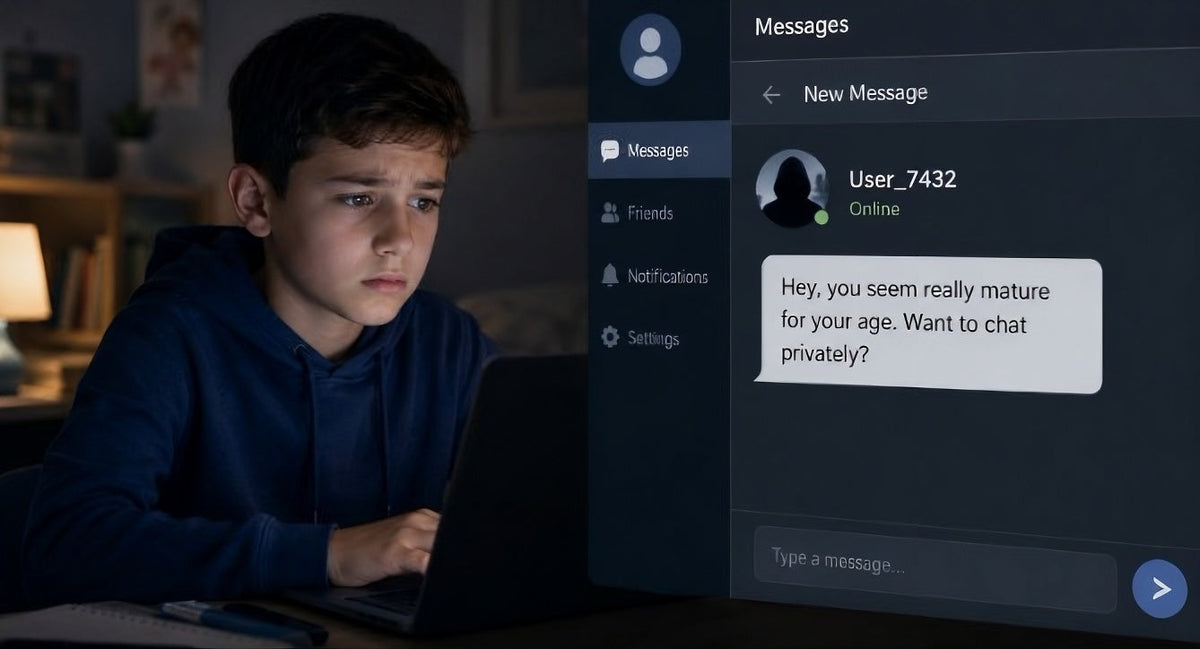








Digital scams targeting children rarely begin with obvious danger. They begin with pressure. A flashing warning. A message that says “respond now.” A countdown that feels real and immediate. As a parent, I have watched how quickly a child’s face changes when a device suddenly announces a “security threat.” As an educator, I have studied how those alerts are designed. The goal is not confusion. The goal is emotional reaction.
Children are not careless online. They are developing. Their brains are still learning how to balance emotion and logic. Scammers understand this and design messages that activate fear first and critical thinking second. Understanding how urgency and fear work is one of the most practical protections we can offer our children.

Key Takeaways
- Urgency triggers stress responses in children, narrowing critical thinking and increasing impulsive online decisions.
- Scammers use authority cues, countdowns, and social threats to pressure children into sharing information or money.
- Shame and fear-based tactics, including sextortion and fake security alerts, rely on secrecy and emotional isolation.
- Open family conversations and pause-before-action habits significantly reduce the effectiveness of urgency-driven scams.
Why Urgency and Fear Work So Well on Young Minds
What Happens in the Brain When a Message Feels Urgent
When a child sees a message that says “Your account will be deleted in 5 minutes,” their body reacts before their reasoning does. Stress hormones rise, focus narrows, and the child becomes oriented toward solving the “problem” immediately. This reaction is not immaturity. It is a natural biological stress response.
Under urgency, several things happen quickly:
- Stress response activates. The brain shifts into protection mode, prioritizing action over analysis.
- Attention narrows. The child focuses on the threat itself rather than questioning its source.
- Time feels compressed. The countdown creates a sense that there is no space to pause.
- Consultation decreases. The child is less likely to seek help before acting.
Urgency reduces reflection. Fear intensifies it. Research in adolescent brain development shows that decision-making accuracy drops significantly under time pressure, especially in younger teens whose impulse regulation systems are still maturing
A threat to a gaming account, social group, or private information can feel enormous in a child’s world. To adults, it may look minor. To a child, it can feel deeply personal and immediate.
Recognizing this reaction helps parents respond with understanding rather than frustration. When we understand biology, we can guide children toward habits that interrupt that automatic response.
Why Children Are Developmentally More Susceptible
Children are still building impulse control and long-term risk evaluation. The parts of the brain responsible for emotional regulation and critical thinking continue developing into adolescence. Scammers design messages that exploit exactly these growth areas.
Children are especially vulnerable to urgency because:
- Impulse control is still developing. Acting quickly can feel easier than slowing down.
- Risk evaluation is emerging. Long-term consequences are harder to visualize.
- Social belonging feels urgent. Threats to friendships or gaming status feel high stakes.
- Authority cues carry weight. Logos, official language, and system alerts appear trustworthy.
Many scams are layered inside familiar spaces such as gaming platforms, social media messages, streaming apps, and chat features. When something looks like it belongs, children are more likely to trust it.
When families regularly talk about personal boundaries online and data sharing expectations through conversations about children’s online privacy and consent, children develop internal signals that something feels inconsistent. That awareness becomes especially important when urgency is introduced.
How Fake Emergencies Are Structured to Trigger Panic

Scam messages are rarely random. They follow a recognizable pattern. They introduce authority, present a problem, impose time pressure, and offer a fast solution. That solution almost always involves clicking a link, sharing login details, or sending money.
Scam messages are rarely random. They follow a recognizable pattern. They introduce authority, present a problem, impose time pressure, and offer a fast solution. That solution almost always involves clicking a link, sharing login details, or sending money.
Common Urgency-Based Scams Targeting Children
While tactics continue evolving, many urgency-driven scams fall into recognizable categories. Seeing them grouped together helps children and parents spot patterns more quickly.
- Fake account suspension alerts – Messages claiming an account will be deleted or permanently banned unless immediate verification is completed.
- Gaming reward scams – Notifications promising rare skins, currency, or upgrades that “expire in minutes.”
- Sextortion threats – Demands for money paired with countdown warnings about releasing private images.
- Impersonation emergencies – Messages pretending to be a parent, friend, or authority figure asking for urgent help or payment.
- Fake tech support pop-ups – Security warnings claiming a virus or breach that requires instant action.
What connects these scams is not the platform, but the emotional trigger. Each one removes time for reflection and replaces it with pressure. When children learn to recognize that pattern urgency first, verification later they begin to see through the manipulation.
What a Scam Notification Looks Like vs. a Real One
The differences are subtle but important, and walking through them together helps children build recognition skills.
|
Feature |
Legitimate Platform Message |
Scam Message |
|
Tone |
Calm and informational |
Threatening or urgent |
|
Timeline |
Gives time to respond |
Demands immediate action |
|
Requests |
Directs to official site |
Asks for passwords or payment |
|
Language |
Clear and consistent |
Emotional, exaggerated, inconsistent |
Children often notice something feels intense before they recognize it is fake. That emotional spike is the clue worth exploring together.
The Rise of Fake Security Alerts
One increasingly common tactic is the fake security warning. A pop-up appears claiming a virus is detected or an account is compromised. The message feels technical and urgent, often including bold colors or flashing elements to heighten alarm.
Many parents have encountered convincing examples of deceptive security pop-ups targeting kids. These alerts copy official logos and use alarming language to create the illusion of authority. Children may click to “fix” the issue, believing they are protecting themselves, when in fact they are exposing information.
Instead of teaching children to fear every notification, it helps to build a simple habit:
- If a message feels urgent, pause before interacting.
- Close unexpected pop-ups rather than clicking inside them.
- Show a trusted adult before entering information.
A small delay weakens the scam’s emotional grip.
How Social Fear and Embarrassment Are Exploited

The Fear of Losing Social Connection
For many children, digital spaces are social spaces. Friend groups live inside apps, and gaming accounts hold achievements and identity. A threat to those spaces can feel deeply personal. Messages that claim an account will be permanently suspended or removed create fear of exclusion and loss.
Children may respond quickly to protect their standing. They are not being reckless; they are trying to preserve belonging. Recognizing patterns connected to common digital boundary violations helps families see how manipulation often overlaps with identity threats and privacy breaches. When children understand these overlaps, urgency becomes easier to question.
Shame-Based Threats and Sextortion
Some of the most damaging scams rely on shame rather than technical tricks. A child may believe they are speaking with someone their age, only for the tone to shift suddenly into threats. What felt like connection quickly becomes pressure.
These situations often follow a pattern:
- Trust is built quickly.
- Private content is requested.
- Threats and fake deadlines are introduced.
- The child is told not to tell anyone.
The urgency is intentional and designed to create panic. In these moments, children need to hear clearly that they are not to blame and that the scammer is responsible.
Law enforcement agencies in multiple countries have reported thousands of sextortion cases involving minors each year, with numbers increasing as scammers target younger audiences.
Families facing this situation often feel overwhelmed at first, but understanding the steps involved in supporting a child after online threats can help restore calm. A steady, non-judgmental response makes it easier for children to speak up and move forward.
How AI Has Intensified Urgency-Based Scams
Technology has made manipulation more realistic and emotionally convincing.
Voice Cloning and Impersonation
AI tools can replicate voices with surprising accuracy. A child may receive an audio message that sounds like a parent asking for urgent help. The emotional impact is immediate because familiarity reduces skepticism. When familiarity combines with urgency, critical thinking narrows further.
As conversations about AI chatbots and children’s screen habits continue in many households, it becomes clear that digital literacy now includes understanding impersonation risks. Children benefit from knowing that voices, images, and identities can be simulated.
Deepfake Images and Fabricated Evidence
Visual manipulation is becoming more sophisticated, and children are often unaware of how easily images can be altered. Screenshots, profile pictures, and even short video clips can be edited to create convincing but entirely false evidence.
Scammers use fabricated visuals to create urgency and fear in several ways:
- Edited screenshots that appear to show rule violations or account breaches.
- Fake profiles designed to look like trusted friends or official representatives.
- Altered images or videos used to threaten embarrassment or social exposure.
- Manufactured “proof” that pressures children to act quickly without verifying.
Children naturally trust what they see, especially when visuals appear polished and official. Helping them understand that digital images can be manipulated builds healthy skepticism without creating anxiety. A simple reminder that “not everything on a screen is proof” gives children permission to pause before reacting.
Practical Ways to Reduce the Power of Urgency at Home

The goal is not to create fear about fear. It is to build steady confidence.
Build the “Pause Habit”
Families can establish one shared agreement: no online decision requires immediate action without discussion. Framing this as a team strategy makes it collaborative rather than restrictive. Real companies do not mind if users verify through official sites. Mistakes are fixable, but silence makes them harder to address.
Practicing this pause during calm moments makes it more accessible during stressful ones. Children begin to associate intense digital messages with slowing down rather than speeding up.
Create Regular, Low-Stress Conversations
Children are more likely to share concerns when conversations are ongoing rather than reactive. In many homes, parents find that structured prompts make these discussions easier to begin, especially when topics feel sensitive or abstract. Some families use tools like the Raising Digital Citizens coversion card during dinner or car rides to open gentle conversations about online pressure, fear, and decision-making.
What makes approaches like this helpful is not the tool itself, but the rhythm it creates. When digital challenges are talked about casually and consistently, children begin to see these conversations as normal rather than corrective. The discussion becomes about shared learning, not rule enforcement.
Questions that tend to invite connection include:
- What kinds of messages make you feel rushed?
- Has anything online ever made you uncomfortable?
- What would help you feel confident telling me about it?
Over time, these small conversations build familiarity and trust. When urgency eventually shows up on a screen, children are more likely to pause and more likely to talk.
When a Child Has Already Responded to a Scam
Even in careful households, urgency sometimes wins.
Lower the Emotional Temperature First
If a child admits they clicked something suspicious, their anxiety is likely already high. A calm parental response matters more than immediate correction. Asking what made the message feel urgent opens dialogue and shifts focus from blame to understanding.
Take Practical Steps Together
Depending on the situation, practical steps may include:
- Changing passwords
- Enabling two-factor authentication
- Reporting accounts
- Contacting platform support
Taking action together restores a sense of control. Children learn that digital problems can be managed and that honesty leads to support.
Raising Children Who Recognize Manipulation

Scammers rely on speed, emotion, and silence. Families can counter those tactics by building habits that slow things down and keep communication open.
The goal is not to make children suspicious of everything online, but to help them recognize when emotional pressure is being used to influence their decisions.
Over time, resilience grows through small, repeatable habits:
- Pausing before clicking or responding.
- Verifying information through official sources.
- Talking openly about uncomfortable online moments.
- Understanding that mistakes are part of learning, not something to hide.
Digital life will continue evolving, but urgency and fear will remain common manipulation tools. Many parents look to the steady, conversation-centered approach of Raising Digital Citizens as a reminder that digital safety is built through dialogue, reflection, and consistent support at home.
Frequently Asked Questions
1. How can I tell if my child is hiding an online scam out of fear?
Children do not always say, “Something happened.” Often, the signs are behavioral before they are verbal. Sudden secrecy, unusual anxiety around devices, or quickly closing screens when you walk into the room can signal discomfort rather than guilt.
You might notice:
- Increased irritability after being online
- Avoiding conversations about certain apps
- Unusual requests for money
- Trouble sleeping after device use
Instead of confronting immediately, create a calm opening. A simple “You seem stressed lately want to talk?” often works better than direct accusation.
2. Should I take away my child’s device if they fall for a scam?
In most cases, removing access immediately can increase secrecy rather than safety. Children may become less likely to report future issues if they fear punishment.
A more supportive approach includes:
- Addressing the scam together first
- Strengthening privacy settings
- Reviewing what happened calmly
- Setting boundaries collaboratively
The goal is long-term awareness, not short-term restriction.
3. What age should I start talking to my child about urgency-based scams?
Conversations can begin as soon as a child uses apps, games, or messaging platforms independently. Younger children may not understand “scams,” but they understand fairness, tricks, and pressure.
Age-appropriate discussion might look like:
- For younger kids: “If someone tells you to hurry and not tell me, that’s a red flag.”
- For older kids: “Real companies don’t threaten you through random messages.”
- For teens: “Pressure is often the first sign of manipulation.”
The language changes with age, but the core lesson about pause and verification stays consistent.
4. Can parental controls stop urgency-based scams completely?
Parental controls are helpful, but they cannot eliminate emotional manipulation. Scams often arrive through legitimate platforms your child already uses.
Controls can:
- Filter suspicious links
- Limit unknown contacts
- Reduce exposure to risky spaces
However, emotional literacy and open dialogue remain the strongest protections. Technology supports safety, but conversation sustains it.
5. How do I rebuild my child’s confidence after they’ve been manipulated online?
After falling for a scam, children often feel embarrassed or ashamed. Rebuilding confidence requires reassurance and perspective.
Helpful steps include:
- Emphasizing that scammers are professionals at deception
- Reviewing warning signs together without blame
- Celebrating honesty when they tell you
- Reinforcing that mistakes are part of learning
Confidence grows when children see that problems can be solved and that speaking up leads to support, not punishment.