








Why is critical thinking important?
Critical thinking is the ability to evaluate and question the information we encounter online actively.
Learning the skill of critical thinking allows us to analyze, interpret, and make informed decisions rather than accepting everything at face value. The internet is an open platform that grants equal access to all its users to create and upload content with very little regulation before it’s shared on search engines or social media.
Everyone can voice their opinions and their version of the truth, which, in some cases, can be empowering and healthy for democracy. It enables us to hear stories from other parts of the world or society that we wouldn't otherwise encounter through mainstream media.

However, these unregulated media platforms also allow individuals to present fake news and personal opinions convincingly, posing the risk of misleading audiences. This is why it’s important to learn how to judge which sources to trust, identify worthwhile realities to aim for, and recognize fake news and scams.
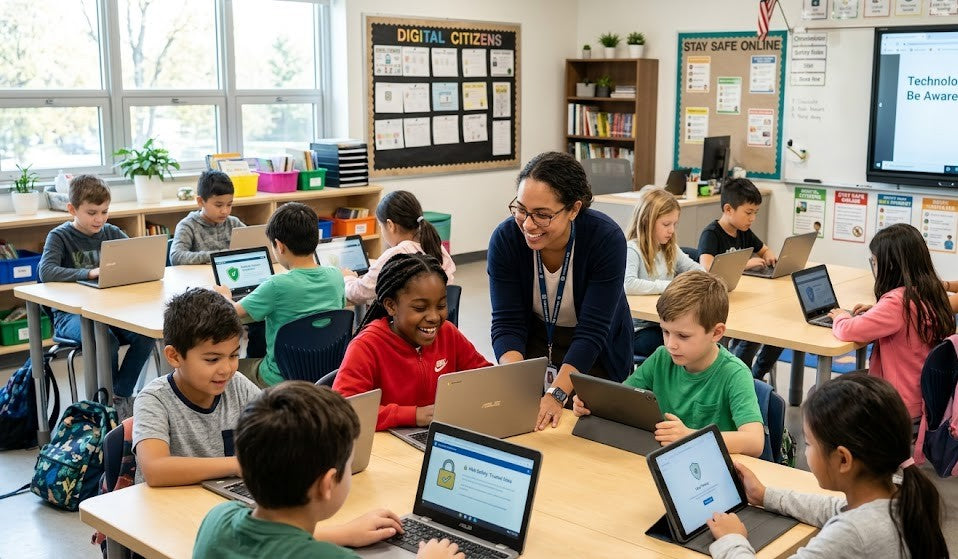
We especially need to help our kids develop this habit and skill of critical thinking to prepare them for the day they explore the internet unsupervised. Most kids (just like adults) use the internet to gather information, and they need the tools to assess the reliability of what they find.
With so much information and inspiration available online - whether in news articles, social media posts, or advertisements - critical thinking helps us determine what’s reliable, what could be misleading, and what aligns with our values and goals.
Teaching our children to think critically about what they encounter online empowers them to spot false information, avoid scams, and make safer, more thoughtful digital choices.
It is equally important to learn to reflect on our own opinions and the information they are based on. Many young people can be led astray by convincing social media influencers to present fake facts or twist scientific studies taken out of context in short, catchy videos.
Teaching our children to think critically about what they encounter online empowers them to spot false information, avoid scams, and make safer, more thoughtful digital choices.
In a world where misinformation and manipulation are common, critical thinking is essential for understanding what’s true and safe to base our knowledge on, who we can trust, and how to interact responsibly online.