






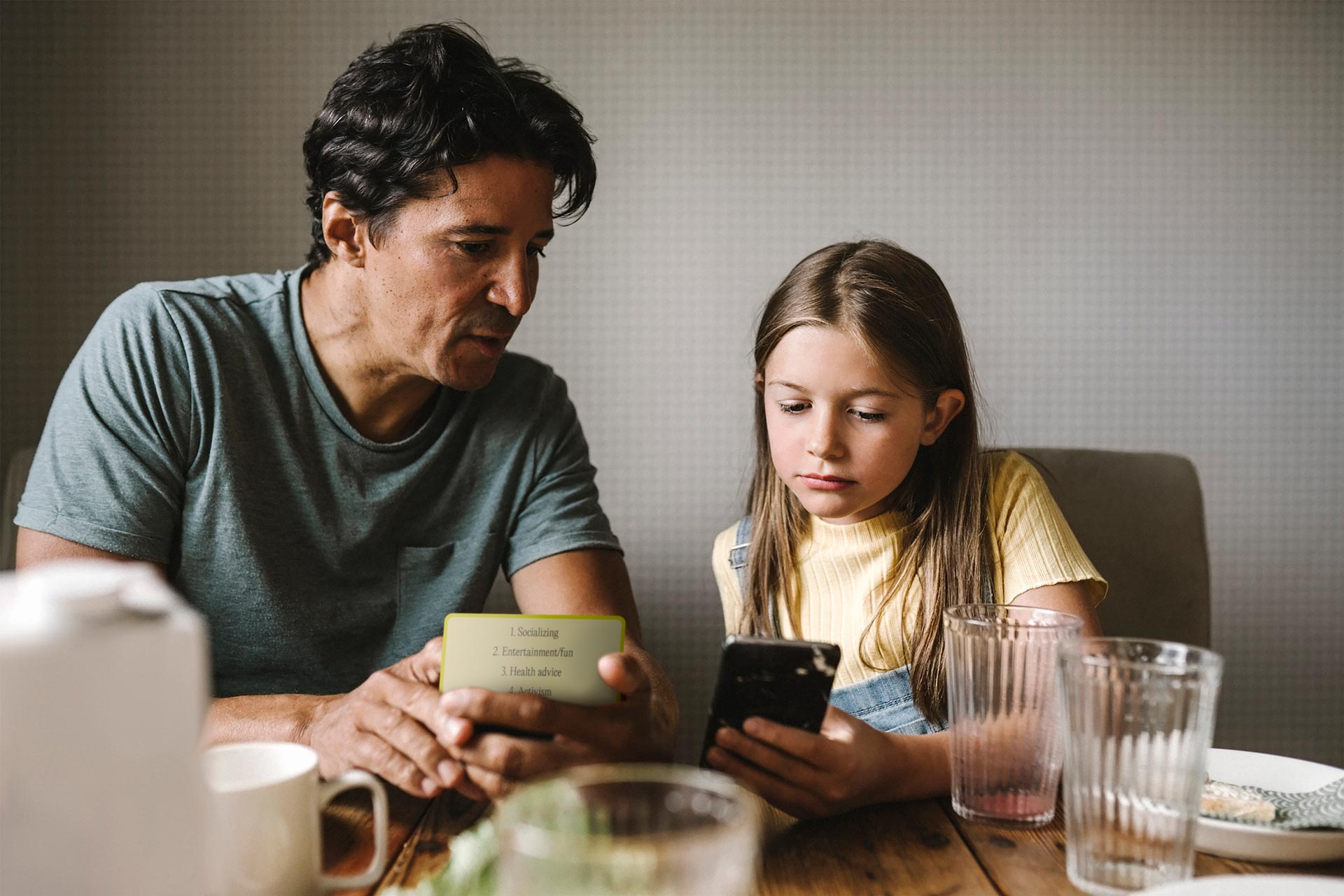




Children today spend a significant amount of time online for learning, entertainment, and social connection. While the internet offers many benefits, it also exposes children to content they may not be emotionally prepared to understand, including pornography, graphic violence, or disturbing images. Understanding the digital dangers children can encounter online can help parents prepare for these situations before they happen.
A child may encounter this type of content accidentally through a pop-up, search result, social media feed, online game, or a message from another person. Sometimes children may also seek out content because of curiosity. Whatever the situation, a parent’s response plays an important role in helping a child feel safe, understand what happened, and develop healthier digital habits.
The most important step is creating a calm and supportive conversation. Children need to know that they can turn to their parents when something uncomfortable happens online.

Key Takeaways
-
Stay calm so your child feels safe talking openly.
-
Avoid blaming, shaming, or immediately punishing your child.
-
Find out how the content appeared and how your child felt about it.
-
Explain why certain online content can be harmful or misleading.
-
Teach children how to respond when they see something upsetting.
-
Use safety settings as support, not as a replacement for conversations.
A Parent’s First Response Can Shape Future Online Choices
When children see harmful content, they often look at their parents’ reactions to understand whether they should feel afraid, embarrassed, or comfortable asking for help.
A reaction based on anger may cause a child to hide future online experiences. A calm response teaches them that difficult situations can be discussed and solved.
Parents can begin with simple statements such as:
-
“I’m glad you told me.”
-
“Let’s talk about what you saw.”
-
“You can always ask me questions about things you find online.”
What Parents Should Do Immediately
|
Situation |
Helpful Parent Response |
Response to Avoid |
|
Child accidentally sees disturbing content |
Reassure them and ask what happened |
Blaming them for seeing it |
|
Child looks curious about adult content |
Explain age-appropriate information calmly |
Using fear or punishment to stop questions |
|
Someone sends harmful content |
Help them block and report the person |
Telling them they should have known better |
|
Child feels upset or scared |
Listen and provide comfort |
Ignoring their feelings |
Ask Questions Before Making Assumptions
Parents may immediately want to know why their child saw the content. However, asking questions with curiosity rather than judgment helps children explain honestly.
Useful questions include:
-
“Where did you see this?”
-
“Did someone send it to you?”
-
“Was it something you expected to see?”
-
“How did it make you feel?”
-
“Has anything like this happened before?”
Understanding the situation helps parents decide whether the child needs reassurance, education, or additional support.
Help Children Understand Harmful Online Content

Children may not understand that online images and videos can be edited, exaggerated, or created to attract attention. They may believe that what they see online represents real relationships, emotions, or behavior.
Parents can explain that:
-
Not everything online is made for children.
-
Some content is designed to shock or influence viewers.
-
Online videos may not show healthy or realistic situations.
-
People can share harmful content without considering who will see it.
These conversations help you build your child’s digital literacy by strengthening critical thinking skills instead of simply relying on rules.
Understanding Different Types of Online Exposure
Not every situation requires the same response. The way a child encounters harmful content can affect the next steps parents should take.
|
How a Child Encounters Content |
What Parents Can Do |
|
Accidental pop-up or search result |
Explain that unexpected content can appear online and review safer browsing habits |
|
Social media recommendation |
Adjust settings, review follows, discuss responsible scrolling, and explain how social media algorithms shape what kids see. |
|
Sent by another person |
Help the child block/report the sender and discuss online boundaries |
|
Intentional searching |
Have an open conversation about curiosity, safety, and healthy information sources |
Avoid Shame and Create Trust
Children need guidance, not humiliation. If they feel embarrassed or afraid, they may avoid asking for help in the future.
Instead of saying:
“Why were you looking at that?”
Try:
“I want to understand what happened so I can help you.”
A supportive approach teaches children that mistakes and uncomfortable experiences can become learning opportunities.
Review Digital Safety Settings Together

Technology tools can help reduce exposure to inappropriate content, but they should be combined with ongoing conversations. It can also help to review your parental controls regularly as children’s apps, devices, and online habits change.
Parents can review:
-
Search filters.
-
App privacy settings.
-
Content restrictions.
-
Screen time settings.
-
Reporting and blocking options.
When children understand why these tools exist, they are more likely to make safer choices. For video platforms, parents can also make YouTube safer for kids by reviewing platform-specific safety and content settings. It is also useful to understand age verification and its limitations when deciding which safeguards to rely on.
Talk About Curiosity and Online Questions
Curiosity is a normal part of growing up. Children may encounter questions about relationships, bodies, or difficult topics online.
Parents can encourage children to ask questions and explain that the internet is not always the safest place to find answers.
Creating regular conversations about digital life helps children build confidence and judgment.
When Should Parents Seek Extra Support?
Most children can process a disturbing online experience with reassurance and guidance. However, additional support may be useful if:
-
The child continues feeling frightened or distressed.
-
The content involved threats, exploitation, or direct contact with another person.
-
The child shows major changes in behavior.
-
The experience affects sleep, school, or relationships.
In these situations, parents can consider speaking with a trusted professional for guidance.
Build Open Digital Communication at Home
Online safety is not only about preventing children from seeing harmful content. It is about preparing them to handle unexpected situations.
Children who regularly discuss technology, social media, and online challenges with their parents are more likely to ask for help when something goes wrong.
The goal is to raise children who can use technology responsibly, think critically, and make safe choices even when parents are not watching.
FAQs
Should I punish my child for seeing pornographic or violent content?
Punishment may make children hide future experiences. A calm discussion helps them understand the risks and learn safer online habits.
What if my child says they are curious about adult content?
Curiosity can be discussed in an age-appropriate way. Use the opportunity to explain healthy boundaries, online risks, and trusted sources of information.
Are parental controls enough to protect children online?
Parental controls can reduce exposure, but they cannot replace communication. Teaching children how to think critically is equally important.
How can I make my child feel comfortable telling me about online problems?
Respond with patience, listen before reacting, and remind them regularly that they can come to you when something online feels confusing or unsafe.

