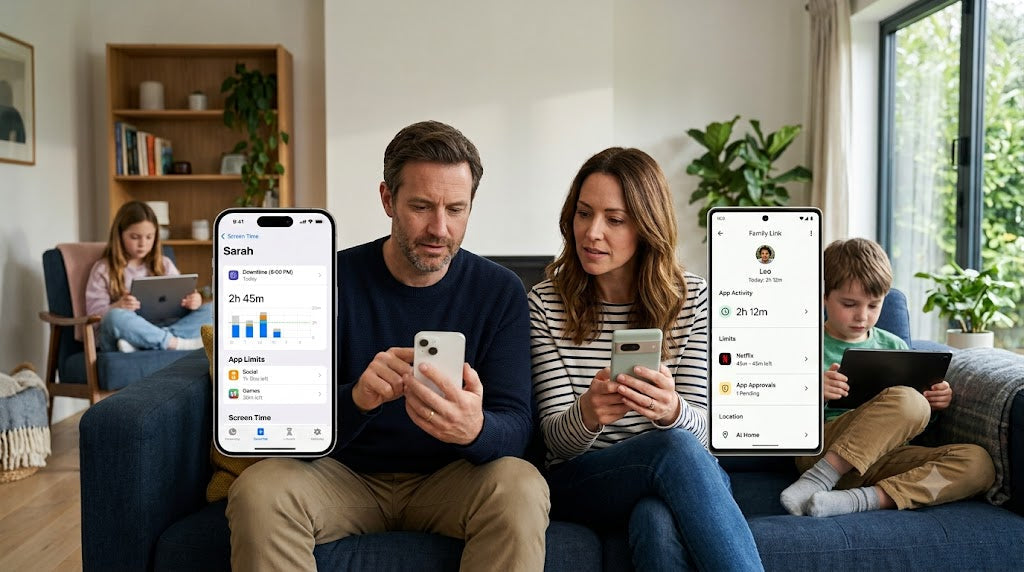










Giving a child their first smartphone can look like a simple milestone. For most parents, it feels much bigger.
A phone can help with school communication, after-school coordination, and staying in touch. It can also change how a child experiences:
- friendships
- privacy
- free time
- independence
- family connection
Many parents feel caught between pressure and worry. One side says everyone else already has a phone. The other wonders whether their child is ready.
For parents who value connection, this decision can feel tender. You may want safety without surveillance, and boundaries without shame.
A smartphone is never just a device. It becomes part of the relationship too.

Key Takeaways
- A child’s first smartphone can affect communication, privacy, friendships, family routines, sleep, and independence.
- Smartphone readiness depends on emotional regulation, social awareness, responsibility, help-seeking, sleep habits, and family capacity.
- Connection-based smartphone conversations help children build digital judgment, privacy awareness, healthy boundaries, and responsible phone habits.
Why a First Smartphone Can Feel Like a Big Transition
A first smartphone is portable, personal, social, and constant. It can shape friendship, privacy, family time, sleep, and a child’s sense of belonging.
For some children, a first phone means growing up, being trusted, or joining the social world that now happens online too.
That emotional meaning matters. When parents stay curious, conversations often become calmer and less like a power struggle.
When Should a Child Get a Smartphone?
Many parents look for a clear age. Age matters, but it rarely tells the whole story, and Common Sense Media’sfirst phones guidance also frames the decision around readiness, family needs, and responsible use.
A younger child with steady routines, honesty, and a habit of asking for help may be more prepared than an older child who hides mistakes or gets overwhelmed by peer pressure.
Readiness can also vary from one area of life to another. A child might be responsible with schoolwork but still sensitive to online comparison. They might need a phone for practical reasons but still need a slower introduction to apps or messaging.
|
Area |
What growing readiness can look like |
What may suggest a child needs more time |
|
Emotional regulation |
Can pause after conflict and talk honestly |
Reacts quickly and hides problems |
|
Social awareness |
Understands kindness, boundaries, and peer pressure |
Gets swept up easily in social drama |
|
Responsibility |
Usually follows through on routines |
Often forgets responsibilities and agreements |
|
Help-seeking |
Comes to adults when unsure or upset |
Pulls away when embarrassed or confused |
|
Sleep habits |
Can wind down and separate from devices |
Struggles to disconnect and settle |
This reflection gives parents more than a simple yes or no. It creates room for nuance, which this decision often needs.
What Parents May Want to Notice Before Giving a Child Their First Phone

Before a smartphone enters daily life, many parents return to a few themes. These are not strict requirements or a checklist. They are simply areas that often shape how the experience feels once the phone is real.
Emotional readiness
A child’s emotional life matters as much as their ability to use the device. Many children are comfortable with apps while still being new to the emotional pressure of digital life.
A smartphone can bring delayed replies, comparison, exclusion, overstimulation, and the feeling of always being available. Children may feel these things intensely because they are still learning how to regulate and recover.
Parents often notice how a child handles discomfort offline. It may help to pay attention to questions such as:
- Can they tolerate boredom?
- Can they move through disappointment?
- Can they admit when something went wrong?
- Can they ask for help when they feel unsure?
These patterns often say more than technical skill.
Social readiness
Phones can deepen connection, but they can also speed up the social pace of childhood. A child may want to message friends but not be ready for gossip, late-night communication, subtle exclusion, or pressure to reply immediately.
Many first-phone challenges are about belonging and comparison, not just technology.
In some seasons, a child may be ready for contact and coordination but not always-on social access.
Safety and privacy awareness
Before a child has their own phone, it helps if they understand some basics of privacy, consent, and digital permanence. They do not need to know everything. They do need to know that messages can travel, screenshots exist, and personal details matter.
Children also need language for moments that feel strange, secretive, or uncomfortable. Safety becomes easier when a child does not feel alone inside a confusing situation.
This is where conversations arounddigital consent can be meaningful. Sharing an image, reposting a message, or passing along private information is not just technical. It is relational too.
Daily rhythms and routines
A smartphone usually lands inside the rhythms that already exist. If rest, homework, transitions, or family connection already feel stretched, the phone may make those strain points more visible, especially because screen use has been linked with later bedtimes and reduced sleep quality in adolescents, according toCDC research.
A steadyschool-day routine can make the transition feel more manageable. What helps is rarely rigid control. It is usually having rhythms that make sense.
These rhythms might include shared understanding around:
- where the phone rests during sleep
- when homework or quiet time happens
- how the phone fits around meals
- when family time stays device-light
Family capacity
Sometimes the less obvious question is whether the family has the bandwidth for this transition. A first smartphone often brings more conversation, follow-up, and adjustment than parents expect.
If family life is already under pressure, or if technology is already a frequent conflict, that context matters. A child may be partly ready while the family still needs steadier ground.
This is not a judgment. It is simply part of what makes the decision real.
Questions That Can Open Up Reflection
Some parents find this decision becomes clearer through questions rather than firm rules. The point is not to find one perfect answer, but to notice what the phone request may be asking of the child and the family.
A few questions that can help are:
- Why does my child want a phone right now?
- What need seems to be underneath the request?
- How does my child respond to peer pressure or embarrassment?
- If something difficult happened online, would my child come to me?
- What family rhythms might support healthy use?
- Would a simpler device meet the current need?
These questions can slow the decision down and create room for choices beyond a simple yes or no.
Different First Steps Can Work
For some families, the real choice is not between a smartphone and nothing. Sometimes a simpler first step meets the current need without introducing too much at once.
|
Option |
Often feels most useful when |
What it can offer |
What it may not offer yet |
|
Basic phone |
The main need is calls or texts |
Lower stimulation and simplicity |
Limited school and app access |
|
Smartwatch phone |
A younger child needs easy contact |
Quick communication and some location features |
Less flexibility and independence |
|
Smartphone with limited setup |
A child is growing into responsibility |
A gradual path into wider use |
More planning and support from parents |
|
Full smartphone access |
A child shows readiness across several areas |
Broader independence and function |
More exposure to distraction and social pressure |
For many parents, seeing options side by side brings relief. The first device does not have to decide the entire future. It can be the beginning of a longer relationship with technology.
How the Transition Can Feel More Supported

Preparation often shapes the experience as much as the phone itself. When a child receives a smartphone with little conversation, learning often happens through conflict.
When the device arrives inside an ongoing relationship, there is more room for honesty and repair.
Starting with connection
Many parents begin not with rules, but with curiosity.
You might wonder together:
- What does the child imagine the phone will change?
- What feels exciting?
- What feels important about getting one now?
Some children want easier contact after school. Some want group chats because they feel left out. Others are drawn to having what peers already have.
When parents understand the meaning underneath the request, the conversation often becomes softer. This is where the CARE framework can quietly matter. Connect is less about a script and more about emotional openness.
Shared understanding tends to help
Children usually do better when expectations feel relational and understandable rather than sudden and one-sided. Parents can still lead while keeping the conversation clear and collaborative.
Families may talk about:
- where the phone rests at night
- which apps fit for now
- what to do if something unsettling appears
- how trust can be repaired
Afamily media agreement can help hold those conversations without making the whole relationship revolve around rules.
Skill-building matters more than simple obedience
Children usually need more than warnings. They need practice in judgment.
That might mean learning how to pause before replying, leave an unkind conversation, notice when an app affects their mood, or ask for help before a situation grows.
This is whydigital literacy matters. A first phone is not only about access. It is also about helping a child make sense of what they see and feel online.
Boundaries Can Still Protect Connection
For many parents, this is the most delicate part. They want safety without sliding into control-focused patterns that erode trust.
Children often respond best when boundaries feel connected to care. Rest matters. Privacy matters. Emotional well-being matters. The phone is part of life, but it does not need to define the whole environment.
In different homes, that may include slower app access, attention tostudent privacy, or reflection on whetherlocation boundaries feel supportive or intrusive.
In the CARE framework, this is where Agree, Respect, and Evolve often matter most. Families find shared understanding, protect dignity, and allow expectations to change over time.
What Parents Often Notice Later Than Expected
It is easy to focus first on settings, filters, and practical rules. Those things matter, but many of the deepest first-phone concerns are relational.
Children need to know that if something goes wrong, the adults in their lives will help before they judge. They need confidence that asking for help will not automatically cost them connection.
A phone also becomes part of how a child learns to communicate, respond, share, and move through social spaces. Learningonline citizenship can offer a richer foundation than simple obedience.
When discussions feel hard to begin,conversation cards can sometimes make early talks feel less tense and more natural.
The Goal Is Not Perfect Control
Before giving a child their first smartphone, parents do not need a perfect plan. What matters most is enough connection to keep talking, enough clarity to notice what the child needs, and enough flexibility to adjust over time.
First smartphone for child readiness is less about one exact age and more about support, relationship, and timing. When parents lead with connection rather than control, children learn more than rules. They learn how to use technology with care, responsibility, and trust.