









Instagram has introduced another way for young people to share everyday moments, but its newest disappearing-photo feature is now facing questions from UK regulators.
On October 6, 2026, Ofcom opened an investigation into Instagram Instants and whether Meta adequately assessed its potential safety risks before launching it.
For parents, the news raises an understandable question: If photos disappear after being viewed, does that really make sharing safer?
The answer is more complicated than it might seem. Understanding how Instants works can help us guide our teens through online privacy, consent, and friendships without turning every new feature into another family argument.
What Is Instagram Instants, and How Does It Work?

Instagram Instants is a photo-sharing feature launched by Meta on May 13, 2026. It allows users to capture spontaneous photos and share them with their Close Friends or followers they follow back. Unlike regular Instagram posts, these photos disappear after someone views them and become unavailable to recipients after 24 hours.
The idea is to make sharing feel more natural and less permanent. Teens can exchange everyday moments without worrying about creating a polished post or attracting public attention. However, disappearing content can also introduce privacy challenges in digital communication that are easy to overlook.
Key Features of Instagram Instants
- Disappearing photos: Shared photos disappear after viewing and are unavailable to recipients after 24 hours.
- Limited sharing: Users can share with Close Friends or mutual followers.
- Screenshot protection: Instagram says recipients cannot take screenshots or screen recordings within the feature.
- Private archive: Senders can access their own shared Instants in a private archive for up to one year.
- Teen protections: Instagram Teen Account protections also apply to Instants.
These features may offer some reassurance, especially when children are sharing ordinary moments with trusted friends. Still, a disappearing photo is not necessarily a private photo. Understanding that distinction matters more than simply knowing which safety settings are available.
Why Is Instagram Instants Under Investigation?
On October 6, 2026, the UK's communications regulator, Ofcom, announced an investigation into Meta's compliance with the Online Safety Act. The investigation focuses on whether Meta carried out suitable risk assessments for illegal content and children's safety before introducing Instagram Instants in May.
Under the legislation, technology companies must assess relevant risks before making significant changes to their platforms. Ofcom is examining whether Meta met those responsibilities, particularly because Instants changes how people create and exchange potentially sensitive content.
Importantly, the investigation does not mean Meta has been found to have broken the law.
Meta says it conducted the necessary assessments and communicated with Ofcom before launching the feature. The company has also highlighted Instants' existing protections, including restrictions on screenshots and additional safeguards for teen accounts.
For families, this is an opportunity to ask a broader question: Should the responsibility for children's online safety rest entirely with parents and teens, or should platforms demonstrate that their features have been designed with young users' needs in mind?
Are Disappearing Photos Really Safe for Teenagers?
Disappearing photos can create a sense of privacy because they are not permanently visible in a conversation. For teenagers who enjoy spontaneous communication, this can make online interactions feel more relaxed and personal. Yet the ability to remove content from view does not eliminate the social risks surrounding it.
A recipient may be unable to use Instagram's built-in screenshot tools, but someone could still photograph a screen using another device. More importantly, discussing digital consent and online privacy helps teens consider what happens when a photo is shared under pressure, sent to the wrong person, or exposes something the sender later regrets.
Instagram Instants: Safety Features vs. Remaining Risks
| Feature | What It Helps With | What Parents Should Remember |
|---|---|---|
| Disappearing photos | Limits how long recipients can view content | Disappearing does not guarantee complete privacy |
| Screenshot blocking | Reduces easy copying within the app | Someone could use another device to capture a photo |
| Close Friends sharing | Limits the intended audience | Even familiar people may not respect boundaries |
| Private archive | Allows senders to revisit their own content | Sent photos may remain in the sender's archive |
| Teen Account protections | Adds existing safety and contact controls | Settings cannot prevent every uncomfortable interaction |
The important distinction is between technical privacy and emotional safety. An app may limit who sees a photo or how long it remains available, but it cannot guarantee that someone will respect a teenager's boundaries.
This is where family conversations about trust, consent, and personal responsibility become especially valuable.
What Safety Protections Does Instagram Instants Offer Teens?
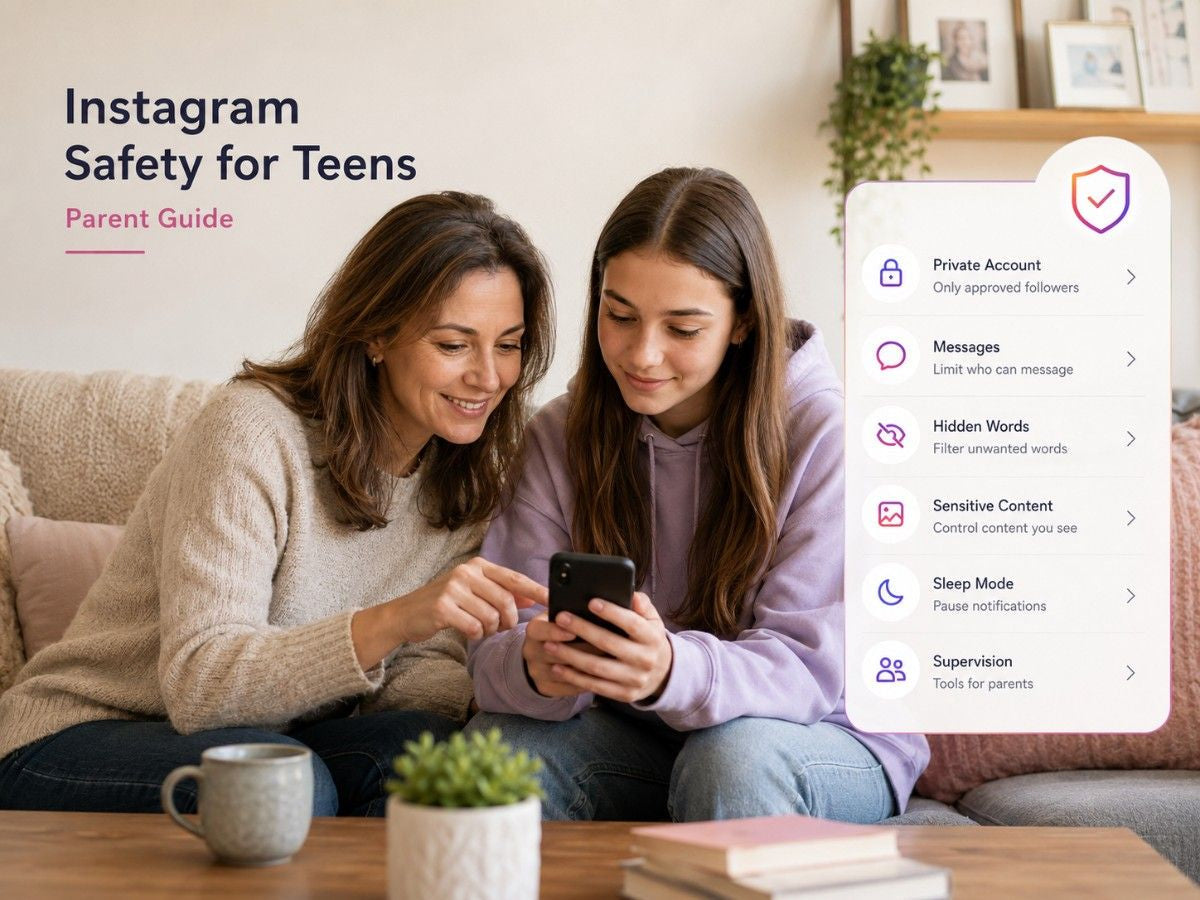
According to Meta, Instants works with Instagram Teen Accounts and Family Center rather than requiring a completely separate safety setup. Existing supervision arrangements also extend to Instants, while parents supervising their teens receive a notification when their child first downloads the standalone Instants app.
Some of the protections include:
- Blocking, muting, restricting, and reporting options.
- Existing teen account content and contact protections.
- Shared daily time limits across Instagram and Instants.
- Sleep Mode protections, including muted notifications during nighttime hours.
- Parental supervision features already available through Instagram.
These tools provide options for managing unwanted interactions, but their usefulness depends partly on whether teens understand them and feel comfortable using them. Parents may find it helpful to review Instagram safety settings for teens together, ask what their teen enjoys about Instants, and discuss when blocking or reporting someone might be appropriate.
How Can Parents Talk About Disappearing Photos Without Creating Conflict?

Teenagers use digital spaces for many of the same reasons adults do: friendship, humor, belonging, and everyday connection. A new sharing feature may feel exciting to them even when parents immediately notice potential risks. Starting with warnings or restrictions can sometimes make an ordinary conversation feel like an interrogation.
Instead, we can begin with curiosity. Asking what makes Instants different from regular messages or Stories gives our children an opportunity to explain their experience. From there, we can use everyday conversations about consent to explore what privacy means when something shared online disappears from view but may still affect real relationships.
A Real-Life Example: When a Funny Photo Becomes Uncomfortable
Imagine your 14-year-old shares a silly picture with a close friend through Instants. A few days later, another friend asks for a more personal photo, saying it will disappear anyway. Your teen feels unsure but worries that refusing might make things awkward between them.
Rather than immediately asking to inspect every message, you might say, "I can see why that feels uncomfortable. What would make it easier to say no?" This acknowledges the social pressure while helping your teen think through possible responses.
Five Conversation Starters for Families
- What makes disappearing photos feel different from regular messages?
- Would you feel comfortable if someone showed your photo to another person?
- How would you respond if a friend asked for a photo you didn't want to send?
- What would you do if someone shared something uncomfortable with you?
- How can friends respect each other's privacy, even when photos disappear?
These conversations are not about expecting perfect decisions. They help children recognize uncomfortable situations, develop confidence in their boundaries, and understand that asking for support is always an option.
What Should Parents Do If an Instagram Instant Causes Harm?
Sometimes a teenager receives an upsetting photo, feels pressured to share something personal, or discovers that someone has violated their trust. The first response can make a significant difference in whether they feel comfortable discussing similar experiences in the future.
A calm, supportive approach might include:
- Listen first: Ask what happened and how your teen feels.
- Avoid blame: Focus on the behavior causing harm rather than criticizing your child's choices.
- Explore options together: Discuss blocking, restricting, or reporting the account.
- Preserve relevant evidence safely: Record account details and report information when appropriate, without forwarding intimate images.
- Seek additional support: Contact the school, platform, or relevant authorities if threats, exploitation, or serious harassment are involved.
If intimate images involving a minor are shared or used for threats, avoid downloading, copying, or circulating them. Use appropriate reporting channels and seek specialist assistance, especially when image-based threats or sextortion are involved. What matters most in these situations is protecting the child's immediate wellbeing while ensuring they know they can ask for help without fear of humiliation or punishment.
Final Thoughts: Building Trust Beyond Disappearing Photos

Instagram Instants is another reminder that digital parenting involves more than understanding the latest technology. Features may change, safety settings may improve, and new investigations may reveal gaps in platform responsibility. Yet children still need many of the same things: connection, privacy, respect, and confidence that their parents will listen.
Rather than trying to anticipate every possible online risk, we can help our teens develop the judgment to recognize pressure, respect boundaries, and seek support when something feels wrong.
The goal is not to control every disappearing photo. It is to build relationships where children feel safe bringing difficult online experiences into the conversation.
FAQs
Can Instagram Instants Photos Be Saved or Recovered?
Instagram says recipients cannot take screenshots or recordings through Instants, and shared photos disappear after being viewed. However, senders can access their own archive for up to one year. Someone could also use another device to photograph a screen, meaning disappearing content should never be treated as completely impossible to preserve.
Should Parents Stop Their Teens From Using Instagram Instants?
There is no single answer that fits every family. A teen's age, maturity, experiences, and ability to recognize uncomfortable situations all matter. Rather than making an immediate decision based on alarming headlines, parents can learn about the feature together and use a family screen-time agreement to agree on boundaries that respect both privacy and safety.
Does the Ofcom Investigation Mean Instagram Instants Is Unsafe?
Not necessarily. Ofcom is investigating whether Meta fulfilled its legal responsibilities to assess risks before introducing Instants. The regulator has not concluded that Meta violated the law. Although the investigation raises important questions about safety by design, it does not establish that every interaction through Instants is harmful or unsafe.