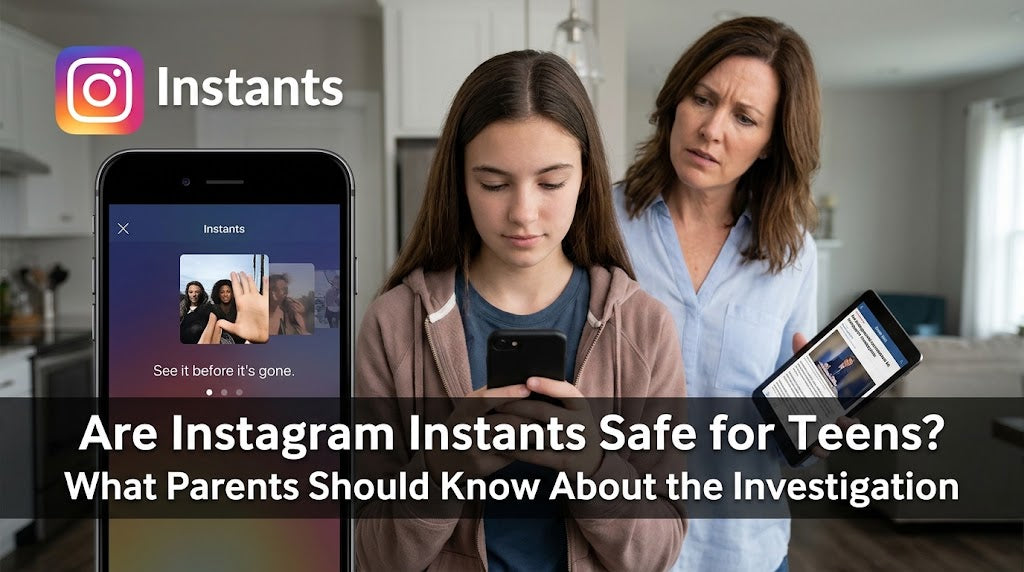










Instagram is part of everyday life for many teens. It can help them stay connected, express creativity, follow interests, and feel included. At the same time, it can expose them to unwanted contact, comparison, harmful comments, mature content, and pressure to stay visible.
This is why Instagram safety settings for teens matter. They are not about controlling every part of a teen’s online life. They are tools that can support healthier digital boundaries while families keep the conversation open.
No setting can replace trust. The strongest support usually comes from a mix of safer account settings, ongoing conversations, and a relationship where teens feel comfortable asking for help when something online feels confusing or uncomfortable.

Key Takeaways:
-
Instagram Teen Accounts help protect teens through privacy controls, contact limits, content filters, time reminders, and supervision tools.
-
Parents can reduce Instagram risks by reviewing private accounts, DM limits, Hidden Words, Sensitive Content Control, and reporting tools.
-
Instagram safety works best when parents use transparent conversations and trust-building support instead of secret monitoring or strict control.
Understanding Instagram Teen Accounts
Instagram Teen Accounts include added protections designed specifically for younger users. These accounts are meant to create a more age-appropriate experience around privacy, contact, content, and time.
For parents, this can feel reassuring. Some protections may already be built into the account experience, which means families do not have to start from zero.
Still, every teen is different. Some are cautious online. Others may accept follow requests quickly, join group chats, or engage with unfamiliar content because they do not want to feel left out.
The goal is not perfection. The goal is awareness.
Why Instagram Safety Settings Matter
Many online challenges begin with small moments that seem harmless.
A teen may:
- Accept a follow request from someone they barely know
- Stay in a group chat that feels uncomfortable
- Scroll longer than they intended
- Feel pressure to reply quickly
- Compare themselves to edited posts
- See recommended content they never searched for
Over time, these moments can affect sleep, mood, confidence, attention, and wellbeing, concerns also highlighted in the U.S. Surgeon General’s advisory on youth mental health.
Instagram safety settings help create protective boundaries around some of these experiences. They cannot remove every risk, but they can reduce unnecessary exposure and support healthier habits.
Parents often notice that Instagram concerns overlap with TikTok boundaries, especially because teens move between platforms while carrying the same social habits and pressures with them.
Privacy Settings and Private Accounts
One of the most important Instagram privacy settings for teens is keeping the account private.
A private account gives teens more control over who can see their posts, stories, and interactions. Instead of allowing anyone to view their profile, it creates a pause before someone gains access.
Privacy is not secrecy. It is a boundary.
Just as families would not invite every stranger into their home, teens do not need to give every online user access to their personal life.
A private account can also open useful conversations about digital relationships. It encourages teens to think about:
- Who do I actually know?
- Who do I trust?
- Who can see my photos and stories?
- What am I sharing about myself?
These questions help teens build judgment, not just follow instructions.
Followers, Social Pressure, and Visibility
Follower decisions are rarely just about safety for teenagers.
They can also be connected to belonging, popularity, and identity. A teen may feel uncomfortable declining requests because they do not want to seem rude, unfriendly, or out of the loop.
That is why safety conversations can feel complicated. What looks like a simple privacy choice to a parent may feel socially meaningful to a teen.
Sometimes the deeper issue is not the follower request itself. It is the trend pressure that can make visibility feel tied to acceptance.
Understanding this emotional layer helps parents respond with empathy. Rather than focusing only on who follows a teen, families can also talk about why certain follower decisions feel important.
Messaging, DMs, and Digital Boundaries
Direct messages are a central part of many teens’ Instagram experience.
DMs can support friendship, humor, collaboration, and connection. They can also become spaces where pressure, bullying, manipulation, or unwanted attention appear.
Instagram parental controls for teens can help limit who sends messages, but settings are only part of the picture.
What often matters most is helping teens recognize how a conversation feels.
A message may deserve closer attention if it:
- Creates pressure to keep secrets
- Encourages risky behavior
- Makes the teen feel guilty for not responding
- Includes inappropriate comments
- Creates confusion, discomfort, or fear
Many online situations are not obvious at first. A teen may simply feel uneasy without knowing exactly why. Making room to talk about those feelings can be more helpful than focusing only on rules.
Hidden Words and Restricted Words Settings
Hidden Words is one of Instagram’s most practical safety features.
This setting helps filter potentially offensive comments and message requests before they reach a teen. Families can also customize restricted words based on specific concerns or experiences.
This can be useful for:
- Bullying
- Harassment
- Body-shaming
- Sexual comments
- Slurs
- Repeated teasing
No filter is perfect, but reducing exposure to harmful language can support emotional wellbeing.
A conversation about online interactions becomes more useful when parents understand how online approval can influence confidence, identity, and decision-making during adolescence.
Hidden Words vs. No Filtering
|
Approach |
Potential Experience |
|
Hidden Words Enabled |
Reduced exposure to offensive comments and requests |
|
No Filtering |
More exposure to potentially harmful language |
|
Custom Restricted Words |
More personal protection based on lived experience |
Rather than seeing these tools as restrictions, many families view them as digital boundaries that protect emotional space.
Sensitive Content Control and Recommendations

Instagram’s Sensitive Content Control helps limit exposure to mature or potentially upsetting content in Explore, Reels, and recommendations.
This matters because teens often encounter content they never intentionally searched for. Recommendation systems predict what users may continue watching, and over time, those recommendations can shape what appears in a teen’s feed.
Sensitive Content Control is easier to understand when families develop algorithm awareness together.
When teens understand that algorithms respond to clicks, searches, likes, and viewing patterns, they become better equipped to think critically about what appears on their screen.
Key Instagram Safety Settings
|
Safety Setting |
Primary Purpose |
|
Private Account |
Controls profile visibility |
|
Messaging Limits |
Reduces unwanted contact |
|
Hidden Words |
Filters harmful comments |
|
Sensitive Content Control |
Limits mature recommendations |
|
Sleep Mode |
Supports healthier rest |
|
Supervision Tools |
Provides additional parental visibility |
Each setting addresses a different part of online safety. Together, they create a more supportive digital environment.
Time Limits, Sleep Mode, and Wellbeing
One common family concern is not only what teens see online, but how much time they spend there.
Instagram is intentionally engaging. Endless scrolling, notifications, recommendations, and social interaction can make it hard to step away.
This is true for adults as well as teens.
Time reminders and Sleep Mode can support healthier habits by encouraging pauses and reducing late-night engagement. These tools can be framed around wellbeing rather than punishment.
Helpful family questions include:
- How does Instagram affect sleep?
- Does scrolling help or increase stress?
- Does it interrupt homework or hobbies?
- How does mood change after extended use?
These conversations shift the focus away from control and toward self-awareness.
Instagram Supervision Tools for Parents

Instagram supervision tools give parents additional visibility into certain parts of a teen’s account experience.
For some families, supervision feels reassuring because it allows involvement without constant checking. For others, it raises questions about privacy and trust.
There is no single approach that fits every family.
What often matters most is transparency. Teens usually respond better when they understand what information is visible, why it matters, and how parents intend to use it.
Supervision Approaches
|
Approach |
Likely Impact |
|
Secret monitoring |
May reduce trust |
|
Transparent supervision |
Often encourages openness |
|
Collaborative discussions |
Can strengthen communication |
|
No ongoing conversation |
May create confusion |
The healthiest outcome is not perfect oversight. It is maintaining a relationship where both safety and trust remain important.
Some families find that conversation cards help digital-safety discussions feel more natural and less like formal lectures.
Blocking, Reporting, and Asking for Help
Instagram includes tools that allow users to protect themselves when interactions become uncomfortable or unsafe.
These include:
- Blocking accounts
- Restricting interactions
- Muting users
- Reporting inappropriate content
- Leaving group conversations
- Removing followers
These tools matter because they give teens options.
Young people sometimes stay in uncomfortable situations because they are unsure how to leave. Understanding available safety tools can make it easier to set boundaries when needed.
Technology tools are only part of the solution. Teens also need to know they can seek support when something feels overwhelming, confusing, or emotionally difficult.
Building Digital Resilience Alongside Safety
Safety settings can reduce risk, but they cannot remove disappointment, comparison, rejection, or social pressure.
These experiences are part of growing up both online and offline.
Digital wellbeing includes helping teens develop emotional skills that allow them to navigate social media thoughtfully. Teens often benefit from learning how to enjoy social platforms without attaching their self-worth to likes, followers, comments, views, or online attention.
Developing social resilience can help young people enjoy connection while keeping digital feedback in perspective.
Over time, these emotional skills become just as important as any safety feature.
Common Challenges Parents Face

Many parents wonder whether they are being too strict or not involved enough.
Some feel tempted to check everything. Others avoid conversations because they fear conflict. These tensions are normal.
Parenting in the digital age often means balancing:
- Protection with independence
- Involvement with privacy
- Guidance with trust
- Safety with emotional connection
The challenge is not finding a perfect formula. It is staying engaged, curious, and open to conversation as both technology and teens change.
Final Thoughts
Instagram safety settings for teens can help create a healthier online experience.
Private accounts, messaging limits, Hidden Words, Sensitive Content Control, supervision tools, Sleep Mode, and reporting features all support safer digital boundaries.
At the same time, the strongest protection rarely comes from settings alone. It comes from relationships.
When teens feel understood, respected, and supported, they are more likely to ask questions, share concerns, and seek help when something online does not feel right.
Instagram safety is not simply about managing an app. It is about helping young people develop the awareness, confidence, and judgment they need to navigate digital spaces in a healthy way.
That process looks different in every family, but the goal remains the same: creating an online environment where safety, trust, and connection can grow together.